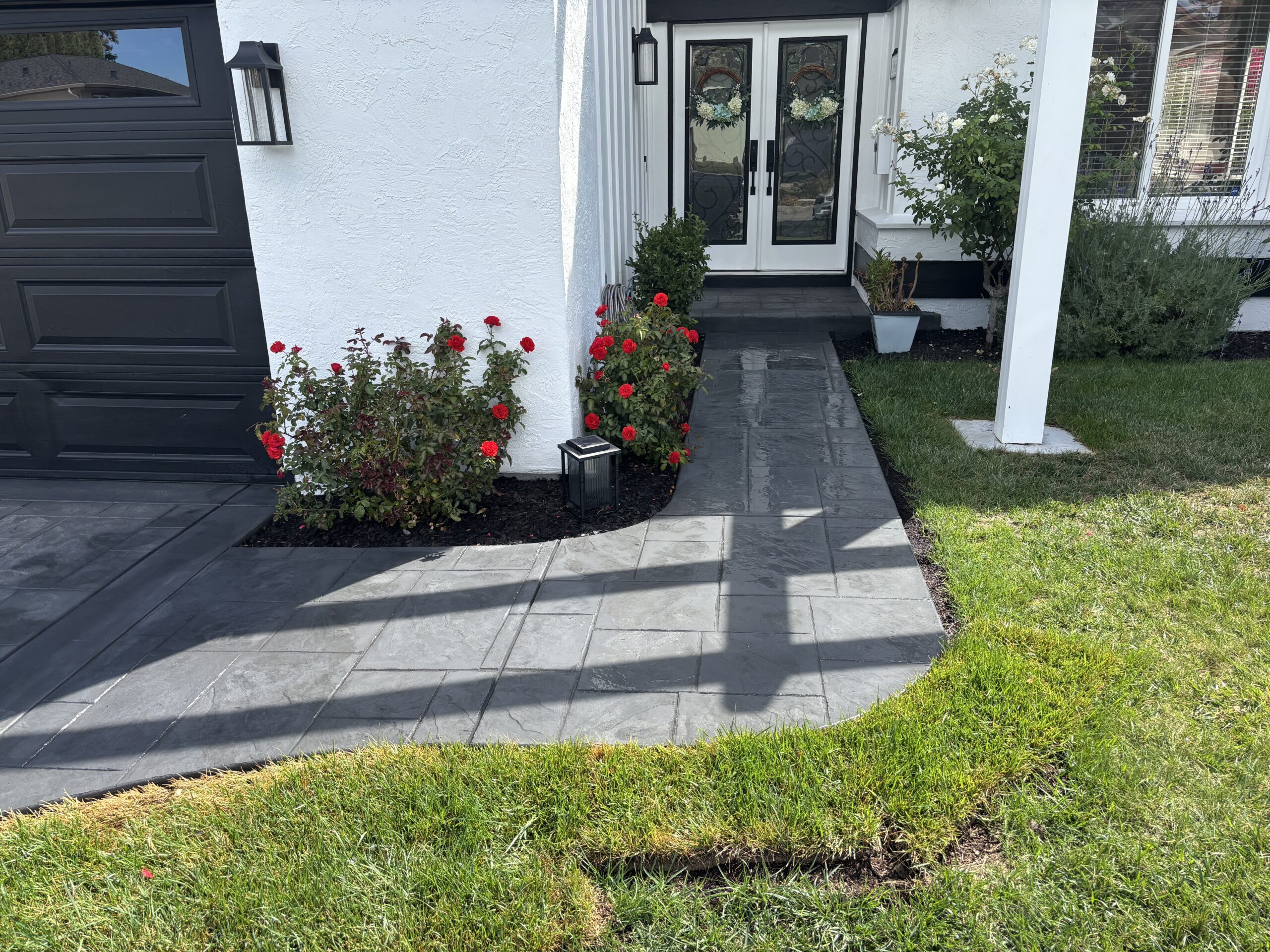
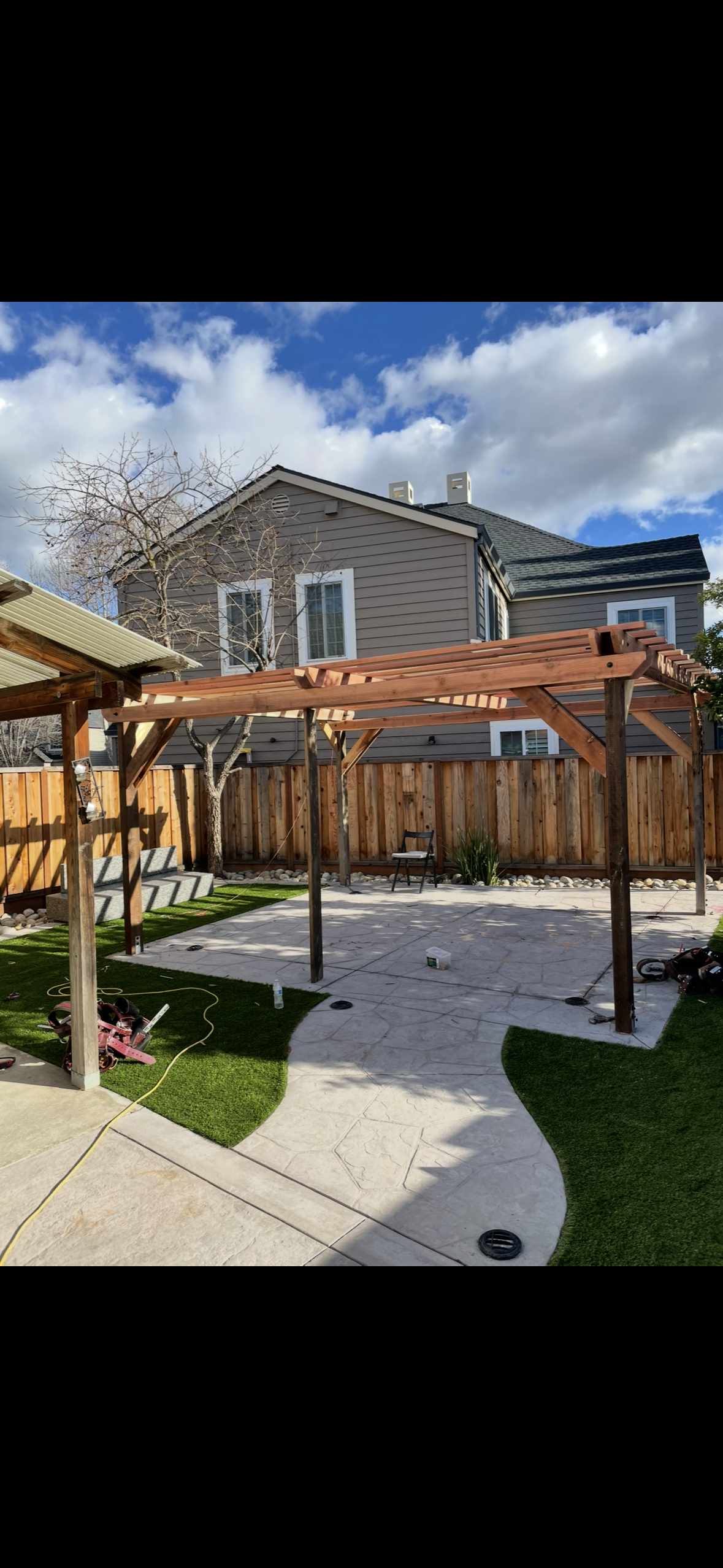
Walkways people notice — for the right reasons
A walkway is the first concrete a guest steps on. It should feel solid, be easy to walk in the rain, and lead the eye to your front door. Behind the house, a side-yard walkway keeps mud out of the garage and gives you a clean path for bins and maintenance.
Walkway projects we build
- Front entry walks from the driveway or sidewalk to the door
- Side-yard concrete for trash bins, AC units and access
- Garden paths connecting patios, gates and outbuildings
- Concrete steps and landings at grade changes
- Replacements for cracked or uneven old walkways
Details that make a walkway last
Slope & drainage
A slight cross-slope moves water off the surface and away from your foundation.
Slip resistance
Broom, exposed aggregate or textured stamped finishes give grip when it’s wet.
Clean edges
Tooled edges and planned joints look sharp and resist chipping.
Side yards: the most overlooked concrete in San Jose
Narrow side yards are hard to reach with equipment, which is why they’re often skipped or done poorly. We plan access first — wheelbarrow, line pump or hand work — so the side yard gets the same base and finish quality as the front.
Walkway FAQs
How wide should a front walkway be?
Many homeowners choose around 4 feet so two people can walk side by side; wider entries look more generous with larger homes. We’ll mark options on site so you can see them.
Can you add steps to a sloped walkway?
Yes. We form concrete steps and landings with consistent rise and run so they’re comfortable and safe.
Can the walkway match my new driveway or patio?
Yes. Pouring them in the same project is the easiest way to get finishes and color to match.